
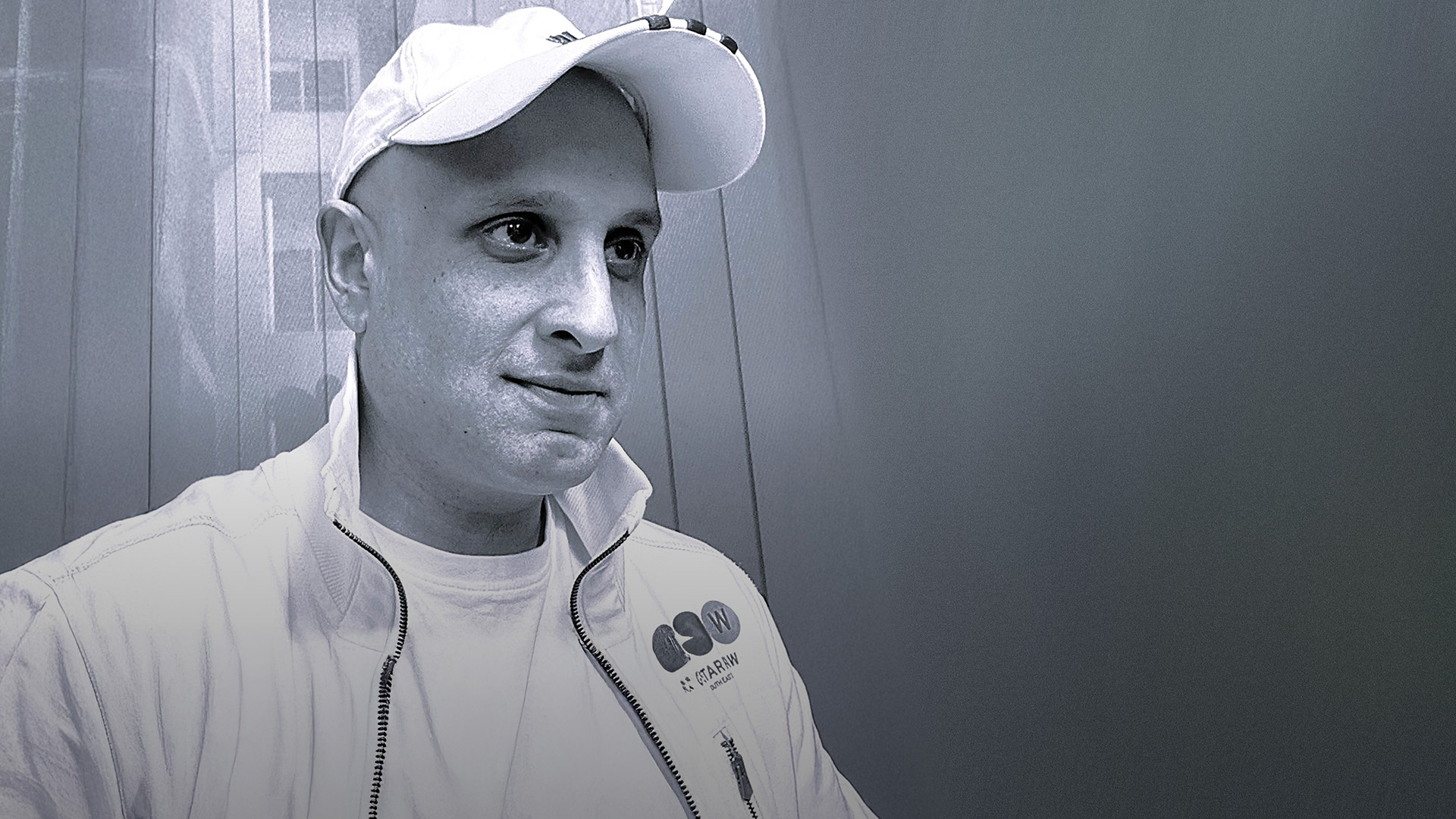
This month we’re staying in Australia to catch up with another MK837 artist. This time around, it’s Trevayne. Trevayne has been releasing with us now since 2024. Sonically, he’s mostly a deep house artist, but he dabbles with other minimal and melodic forms of house as well.
If you’re in his hometown, you might also see him playing piano in a variety of bars and bands. He’s more than just a DJ and producer, he’s a live entertainer and sometimes in our corner of the world, that’s rare.
So, buckle up and enjoy our little chat with Trevayne. As always, this is just part of the interview. You’ll find the whole interview on our Patreon as well as all past interviews.
Until next time, keep it unique!
Dave R
Label Owner
MK837
What first drew you to deep tech house when you began your musical journey in Melbourne?
When I first started immersing myself in the Melbourne scene, it was the city’s after-hours culture that pulled me in—those warehouse spaces, the smoke, the shadows, the relentless grooves that didn’t care for the spotlight or ego. Deep tech house had this hypnotic, cerebral quality—dark but not depressive, minimal but emotionally rich. It wasn’t just music; it was architecture in motion, sound design that carved out space in your head and body. That blend of mechanical precision and human pulse—that’s what hooked me. Melbourne gave me the canvas, but deep tech gave me the language.
After more than two decades in the scene, what keeps your passion for crafting deeper, melodic beats alive?
It’s the tension between repetition and evolution—that’s the magic. No matter how many years pass, there’s always a new way to tell a story with a kick, a sub, and a fleeting melody. I’m still fascinated by how a subtle modulation or a single filter sweep can shift the emotional weight of an entire track. What keeps me going is the alchemy—taking raw, minimal elements and weaving them into something that moves people in ways they can’t explain. And honestly, the deeper I go, the more I realize how much I’ve still got to explore. It’s not nostalgia that drives me—it’s the hunt for that next perfect moment in the dark.
Your recordings blend organic sounds and warm analog synths—what was the first piece of gear or sound that inspired you to experiment?
Honestly, it all started with a Roland E-20 and a clunky old 286 PC back around ’91–’92. That E-20 wasn’t exactly cutting-edge even then, but to me, it was a spaceship. I’d lose hours messing with its preset rhythms and layering melodies over them, trying to bend something slick and emotional out of those plastic keys. The 286, meanwhile, was more stubborn than creative—but even sequencing the simplest MIDI patterns on it felt like opening a portal. That limited setup forced me to be inventive, to squeeze every ounce of soul from those early sounds. And weirdly, that mindset still guides me—it’s not about endless plugins or pristine mixes, it’s about feel, intention, and the imperfections that give music its humanity.
How has performing on international stages and live TV influenced the way you approach studio work?
Performing live—especially on international stages and live TV—forces you to think about connection. You start to understand that what works in a studio doesn’t always translate in a room full of people or through a broadcast lens. It taught me to strip things back, to focus on energy, pacing, and emotional clarity. You learn to produce with intention—crafting sounds that can land in a crowd’s chest or resonate through a camera lens. There’s also the pressure of one-take environments, which sharpened my instincts. In the studio now, I’m not just making tracks—I’m imagining how they breathe, how they unfold in real time, how they speak without words. That live edge keeps the music honest.
When you sit down to compose an EP versus a full-length album, what different goals do you set for each format?
An EP is like a snapshot—it’s focused, punchy, often built around a central mood or groove I’m exploring at that moment. It’s about immediacy and impact—three to five tracks that hit a vein and leave a mark without overstaying their welcome. With an album, it’s a whole other mindset. I think in arcs, in pacing, in emotional flow. It’s about storytelling across time—building tension, offering contrast, letting space and silence do some of the talking too. The goal with an EP is to make a statement. With an album, it’s to build a world.
Can you share a moment where a live audience’s reaction reshaped how you think about one of your tracks?
Back when I was in Malmö, Sweden, I spent a couple of months doing a Saturday night spot at a place called Carib Creole with this incredible local DJ—Abbey Mody. We had real chemistry—not just behind the decks, but in the studio too. We’d spend the week building beats in this little home studio setup, then test them out live that weekend. One night we dropped this experimental, modular-heavy piece we’d been tweaking—deeply layered, kind of abstract, but groovy. I wasn’t sure it would land. But the crowd locked in—like really locked in. Heads nodding, eyes closed, total surrender to the groove. It was a turning point. That moment—between the intimacy of the studio and the raw energy of that floor—inspired what eventually became Quantum Modular Vortex. It taught me that audiences are more open than we think, and that deep doesn’t mean inaccessible.
Which single or EP would you recommend to someone discovering your music for the first time, and why?
I’d recommend starting with Obsidian Circuitry Ritual. It’s a release that threads together the different corners of my sound—deep, melodic, dark, and a little experimental. Across the EP, there are hints of deep house, tech textures, dub atmospheres, and even some off-kilter rhythmic shifts. It’s not trying to be genre-pure—it’s about mood, space, and storytelling. If someone wants to get a true sense of where I’m at creatively, this release offers a bit of everything I’ve come to love in underground electronic music.
Collaboration has been part of your path—what’s one memorable studio session that taught you something new?
One that really stands out is from my time in Malmö, working with that local DJ during our Carib Creole residency. We’d built up a solid rhythm—gig on Saturday, back in the home studio on Sunday, dissecting what worked, what flopped, and what needed rebuilding from the ground up. One session in particular, we were layering modular sequences with percussion loops, and I kept trying to clean it up—quantize, tighten, strip it down. But he stopped me and said, “Let it breathe. That chaos is the point.” It shifted something for me. I realized not everything needs to be polished to hit hard—sometimes the magic is in the unpredictability, in letting the track live a little. That mindset ended up shaping a lot of Obsidian Circuitry Ritual.
How do you balance the drive to experiment with the desire to maintain a coherent deep tech house vibe?
It’s always a dance between discipline and instinct. On one hand, deep tech house has its own internal gravity—groove, minimalism, atmosphere—that I deeply respect. But I’m also wired to push at the edges, whether it’s folding in modular chaos, unexpected textures, or melodic fragments that don’t quite “belong.” The key is intention. I let myself explore, but I keep asking: Does this serve the mood? Does it still move the body, even if the mind’s getting stretched? It’s about tension—not between genres, but between control and surrender. That push and pull is where the best stuff happens.
What core feeling or atmosphere are you aiming to evoke in listeners when they press play on your latest release?
With the two upcoming EPs set for release later this year on MK837, I’m aiming to evoke a deeper sense of immersion—almost a meditative descent into texture, rhythm, and emotional weight. These releases are the result of a pretty serious re-examination of my entire production process. I stripped things back to the foundations: tighter sound design, more intentional space, and a clearer narrative arc in each track. I wanted to get past habits and shortcuts and really ask myself: What am I saying here? The atmosphere I’m chasing is hypnotic but human—grooves that lock in, but also shift, breathe, and carry a kind of emotional undercurrent. Whether it’s on headphones at 3 a.m. or on a club system, I want listeners to feel that something’s been refined—both sonically and creatively.
These EPs aren’t just the next chapter—they’re a recalibration. A line in the sand between what was and what’s next.